
The Meaning of Moral Hazard
Anxious PeopleThe book expands a financial term into a broader question about blame, responsibility, and the unequal power to control consequences.
increasing Bearing strength in each event
 decreasing
Bearing strength in each eventdecreasingThe Investor Trusts the Bank

The Investor Trusts the Bank
Confidence borrowed from experts
The Man on the bridge follows financial advice and treats property investments as secure. He uses those investments to support further borrowing because institutions imply that the arrangement is ordinary.
Risk becomes personal
When the market fails, the explanation shifts: he should have understood the risk. The story introduces moral hazard as a language that can obscure who held power and who bore the loss.
A Bank Defines the Loss

A Bank Defines the Loss
A loaded explanation
A bank employee explains moral hazard as protection from the consequences of one’s own actions, then tells the ruined man he should not have entrusted the bank with his money.
Unequal control
The tree-branch image makes the imbalance clear: the borrower stands far from the trunk while the bank holds the saw. The definition sounds neutral, but its consequences are not shared equally.
A Lesson Passed to a Child

A Lesson Passed to a Child
A painful repetition
The Bank robber’s mother asks forgiveness after spending the child’s earnings intended for Christmas food. She says the child should not have given her the money.
Blame enters family life
The child cannot make the mother’s words into a fair account of responsibility. The memory complicates the idea that people can simply be told to protect themselves from another person’s choices.
A Small Crime in a Large Crisis
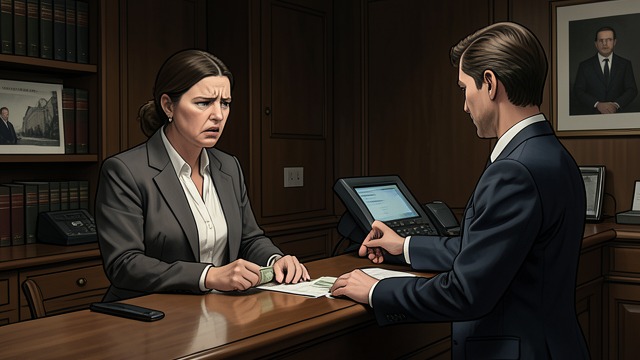
A Small Crime in a Large Crisis
The Bank robber repeats the pattern
The Bank robber attempts to take a precise amount from a bank that refused her credit because she had no money. Her choice is still harmful and illegal, but it arises from a system that leaves little room to recover.
Explanation is not absolution
The novel asks readers to understand how the crisis formed without declaring the robbery right. Compassion and accountability remain in tension rather than canceling each other.
Zara Reconsiders the Rules

Zara Reconsiders the Rules
Professional certainty breaks
Zara tells Nadia that banks often lend while knowing markets may fail, then tell borrowers the loss was their own fault. She sees that her work has helped maintain a system whose moral language hides its choices.
Responsibility becomes personal
Zara resigns because she understands the machinery too well to claim ignorance. Her change is not a complete theory of reform, but a decision to stop calling participation neutral.
Before the financial crash
After the Man on the bridge loses his savings
The Bank robber’s childhood, near Christmas
The morning of December 30
Several days after New Year
